
A new market starts with no search history
In your existing markets, years of pages, reviews, local mentions and brand searches work for you every day. In a new metro, none of that exists yet. Buyers there don’t search for your name because they don’t know it. They search for new homes in an area, near an employer or within a school district, and the builders who appear are the ones who have been building visibility there for years.
Organic visibility takes months to build. When the work starts at the grand opening, the first months of sales lean on paid search and listing portals, which buy attention month by month. Cristobal Varela’s book makes the distinction plainly: paid can buy attention, but SEO earns it and turns it into lasting equity. A new market is where starting early pays the most, and where starting late costs the most.
Commission market research before the name is final
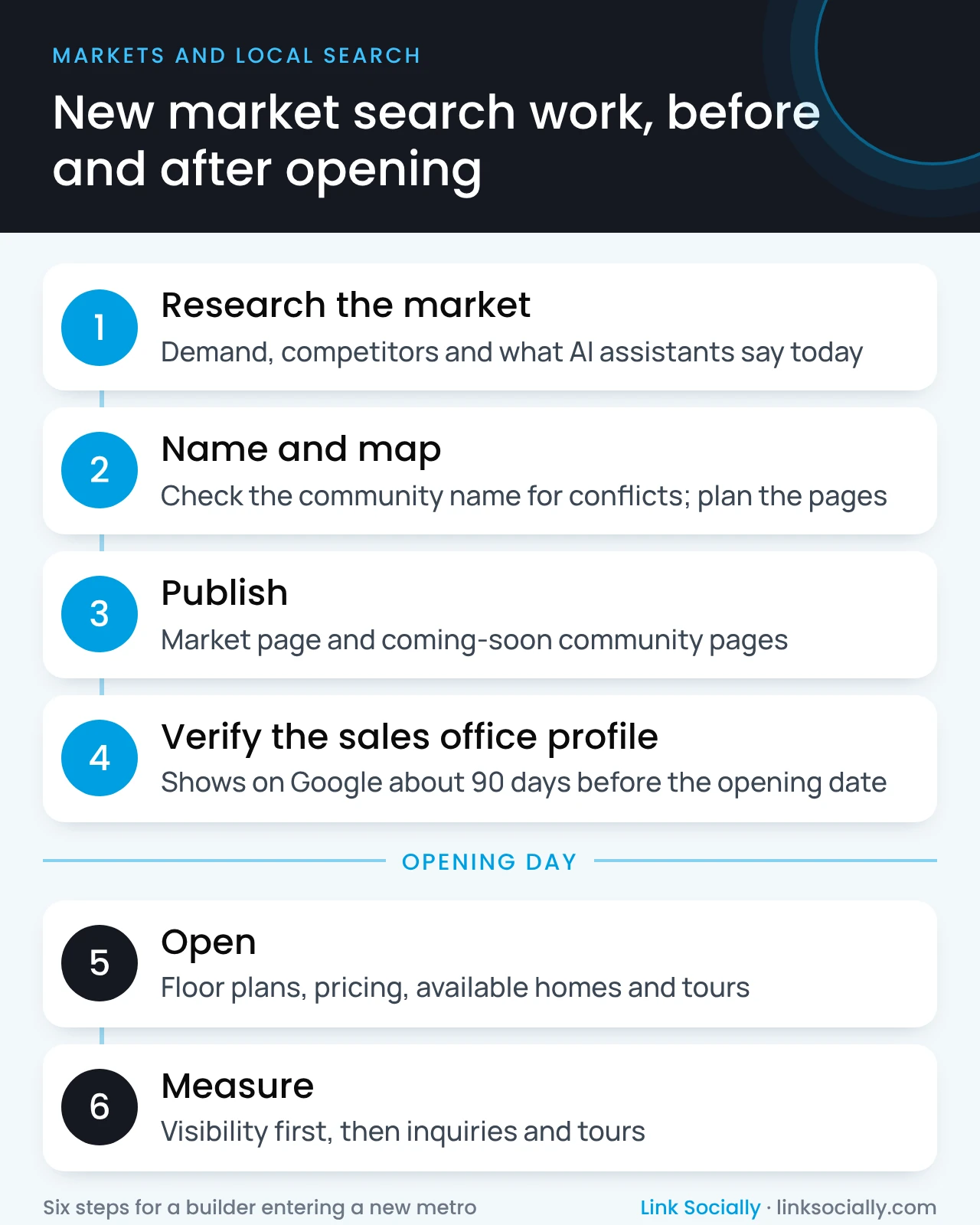
The cheapest moment to get search right is before anything is public. Before the community name, the signage and the website pages are final, ask your team or agency for three pieces of research:
- Demand. What buyers in this metro search for: which areas, school districts, employers and price ranges carry demand, and in which seasons. This is what keyword and market intelligence produces.
- Competition. Which builders win those searches today, and how strong their reviews and local reputation are.
- AI answers. What AI assistants say today when a buyer asks about new home builders in the metro.
The research also protects the community name. A name already used by an existing neighborhood, a business or another builder’s community will compete for its own name in search, permanently. Checking it costs a day; renaming after the signs are ordered costs far more.
Put the market on your website early
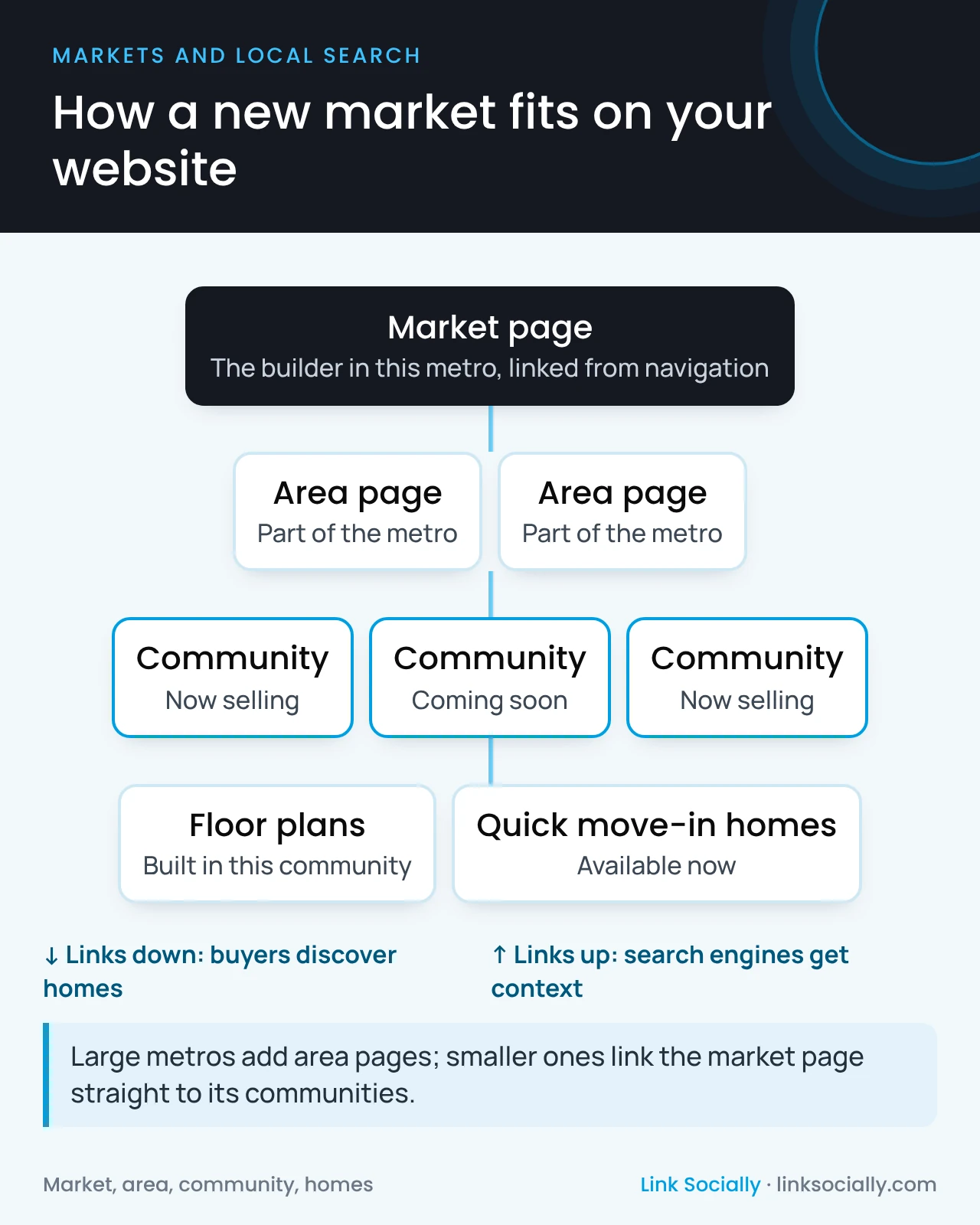
Once the market is public, it should appear on your website as a real part of the company, not as pages added the week of the grand opening. That means a page for the market that introduces the builder there and lists its communities, and a coming-soon page for each community with its location, expected opening and an interest list.
Pages published early collect history: search engines find them, they start appearing for searches, and local partners have something to link to. Pages published on opening day start from nothing on the day you need them most. An interest list on the coming-soon page also gives sales a head start on demand that would otherwise go to competitors.
Plan the sales office’s Google profile on Google’s timeline
For many buyers in a new market, the first thing they see is your sales office on Google Maps. Two of Google’s rules shape the plan:
- Google lists sales offices, not model homes. Its eligibility guidelines require in-person contact with customers during stated hours, and they exclude model homes on their own. Plan the profile around the staffed sales office.
- The profile can appear before you open. Google lets a business set a future opening date up to a year ahead, and the verified profile shows on Google about 90 days before that date.
Ask your team when the profile will be set up and verified, and make sure the community name, address, phone number and hours will match everywhere they appear. The local SEO audit guide lists what to review for every community once it is open.
Earn local credibility before the first buyer arrives
Search engines and AI assistants trust a builder in a new metro partly because other local sources mention it. Much of that is relationship work leadership already does, and it can start well before opening:
- Groundbreaking coverage in local news and business publications.
- A listing on the master-planned community’s site, if you are building inside one.
- Chamber of commerce and builder association memberships in the metro.
- Partner pages from lenders, designers and local organizations you work with.
Each one confirms that you are a real builder in that market. That is the core of entity and authority engineering, and one of the reasons some builders get named in AI answers and others don’t, as the guide on earning AI mentions and citations explains. Reviews come later, from real buyers, so build the review request into the closing process from the first sale.
Judge the launch in two stages
A new market can’t be judged on contracts in its first months, and it shouldn’t be judged on rankings forever. Agree on targets in two stages:
- Before and just after opening: whether the market’s pages are being found, how often they appear in searches, profile views and calls once the profile is live, and whether AI assistants mention you for questions about the metro.
- Once sales begin: inquiries and tours by community from organic search, growth in visibility for searches that don’t include your name, and the share of contracts that started with a search.
Early numbers tell you whether the market is becoming visible; later numbers tell you whether visibility is producing tours. The guide on what impression data tells leadership explains how to read the first stage without overreacting to it.
The questions to ask before opening day
A month before the first community opens, ask your team or agency to show you:
The market research
Demand by area and price range, the competitors who win today, and what AI assistants say about builders in the metro.A name checked for conflicts
Proof the community name was checked against existing neighborhoods, businesses and other builders’ communities.The market on the website
A market page and coming-soon community pages, live and linked from the main menu.The sales office profile plan
The opening date set with Google and the name, address, phone and hours consistent everywhere.Local credibility in motion
Groundbreaking news, partner pages and memberships that mention the builder in the metro.Measurement from day one
Inquiries and tours tracked by community and source, with targets for both stages.
If any of these is missing, the market will open with less visibility than it could have had. Planning this work is what local SEO for a builder is built for.