
Why the first SEO hire often stalls
The pattern is common. A builder hires a capable SEO specialist, gives them the analytics logins and a list of keywords, and asks for growth. Six months later there are reports and recommendations, but little has changed on the website, because every change needed the web team, the content team or division marketing, and none of them reported to the new hire.
Cristobal Varela’s book is blunt about the cause: SEO failure is usually organizational, not tactical. The SEO lead can build the roadmap and flag the risks, but can’t approve content or greenlight changes. That belongs to leadership. Hire for that reality.
What to look for: five things to score
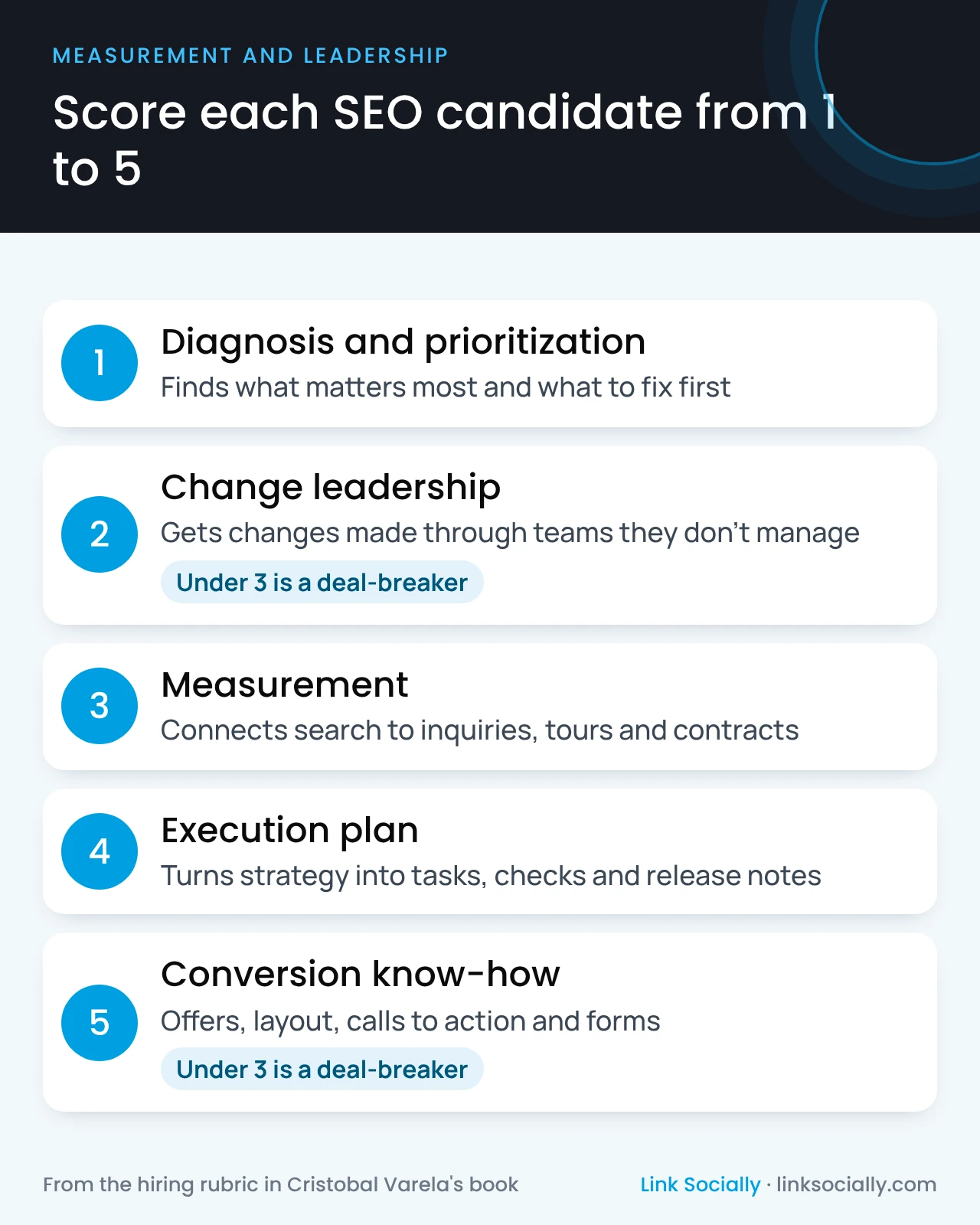
The book offers a one-page rubric for grading SEO candidates and vendors. Score each candidate from 1 to 5 on five qualities.
- Diagnosis and prioritization. Can they find what matters most, and say what to fix first and why?
- Integration and change leadership. Can they get changes made through teams they don’t manage?
- Measurement and decision-making. Do they connect search to inquiries, tours and contracts, as described in connecting organic search to contracts, and use data to decide?
- Execution plan. Can they turn a strategy into clear tasks, checks and release notes?
- Conversion know-how. Do they understand offers, page layout, calls to action and forms, not just rankings?
The book’s rule of thumb: anything under 3 on change leadership or conversion is a deal-breaker for most companies.
Interview for judgment, not tool lists
Most candidates can list the tools they use. Fewer can show how they think. Ask questions that reveal judgment:
- “Our community pages compete with each other for the same searches. How would you find out how bad it is, and what would you fix first?”
- “How would you show this leadership team which contracts started with a search?”
- “Tell me about a change you got made through a team that didn’t report to you.”
- “A redesign is planned for next year. What would you need in place before it starts?”
Good answers start with questions about the business, name trade-offs and end with who has to do what.
Red flags in a candidate
- Guaranteed rankings. Nobody controls search results, and anyone who promises them is selling, not leading.
- Only tools and tactics. If every answer is about software or quick fixes, ask what they would change first and why.
- No shipped work. Recommendations are easy. Ask what they actually got changed, and what happened after.
- Rankings as the only goal. A lead who never mentions inquiries, tours or conversion will report activity, not results.
Set the role up to succeed
Even a strong hire fails without the right setup. Before day one, decide:
- Who they report to, usually the marketing leader, with direct access to the web team and division marketing.
- What they can decide on their own, and what needs approval.
- Development time, a real share of the web team’s capacity, not whatever is left over.
- The rhythm: the book recommends a monthly review of what shipped and a quarterly reset of priorities.
- The definition of done: implemented, measured and documented, not just recommended.
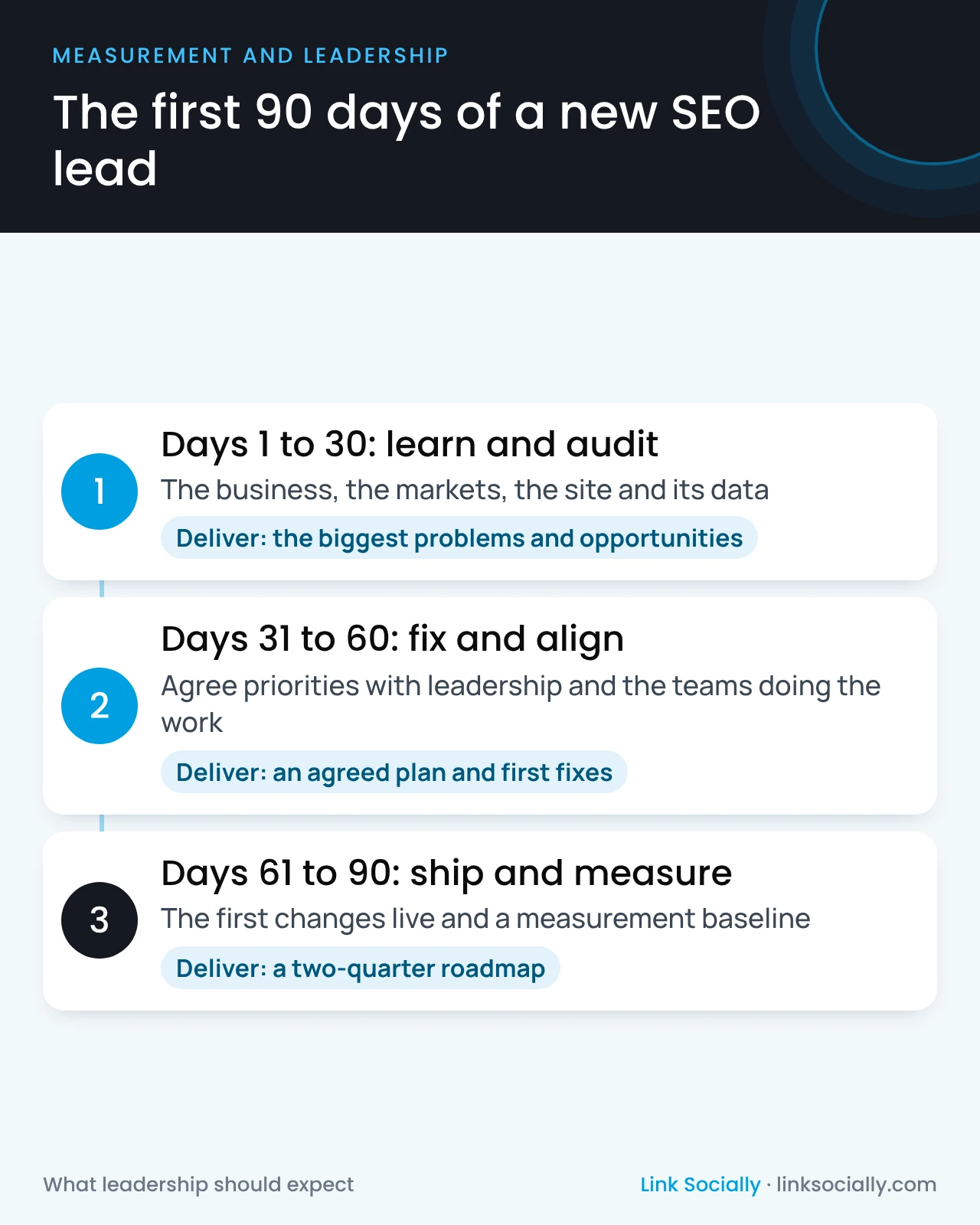
What the first 90 days should look like
- Days 1 to 30, learn and audit: the business, the markets, the site and its data. Deliver a short list of the biggest problems and opportunities.
- Days 31 to 60, fix and align: agree priorities with leadership and the teams who will do the work, and start the first fixes.
- Days 61 to 90, ship and measure: the first changes live, a baseline for measurement and a roadmap for the next two quarters.
In-house, agency or both
The book matches the model to the builder’s maturity: a senior consultant for clarity early on, an in-house lead for continuity, an agency for scale with a strong internal owner. Many builders combine them. A Fractional Head of SEO can set the strategy and help hire and coach the in-house lead, and the guide to SEO agency vs in-house compares the options in more depth.