
Why SEO proposals are so hard to compare
Ask three agencies for an SEO proposal and you may get three very different numbers for what sounds like the same work. One quotes hours, another a list of deliverables, a third a package with a catchy name. None of them tells you what your business will get for the money.
Cristobal Varela’s book recommends a different starting point: define outcomes first, then scope the work in releases, not hours. For a builder, that means sizing the budget from your own business and then asking each proposal what it will deliver against it.
What actually drives the budget
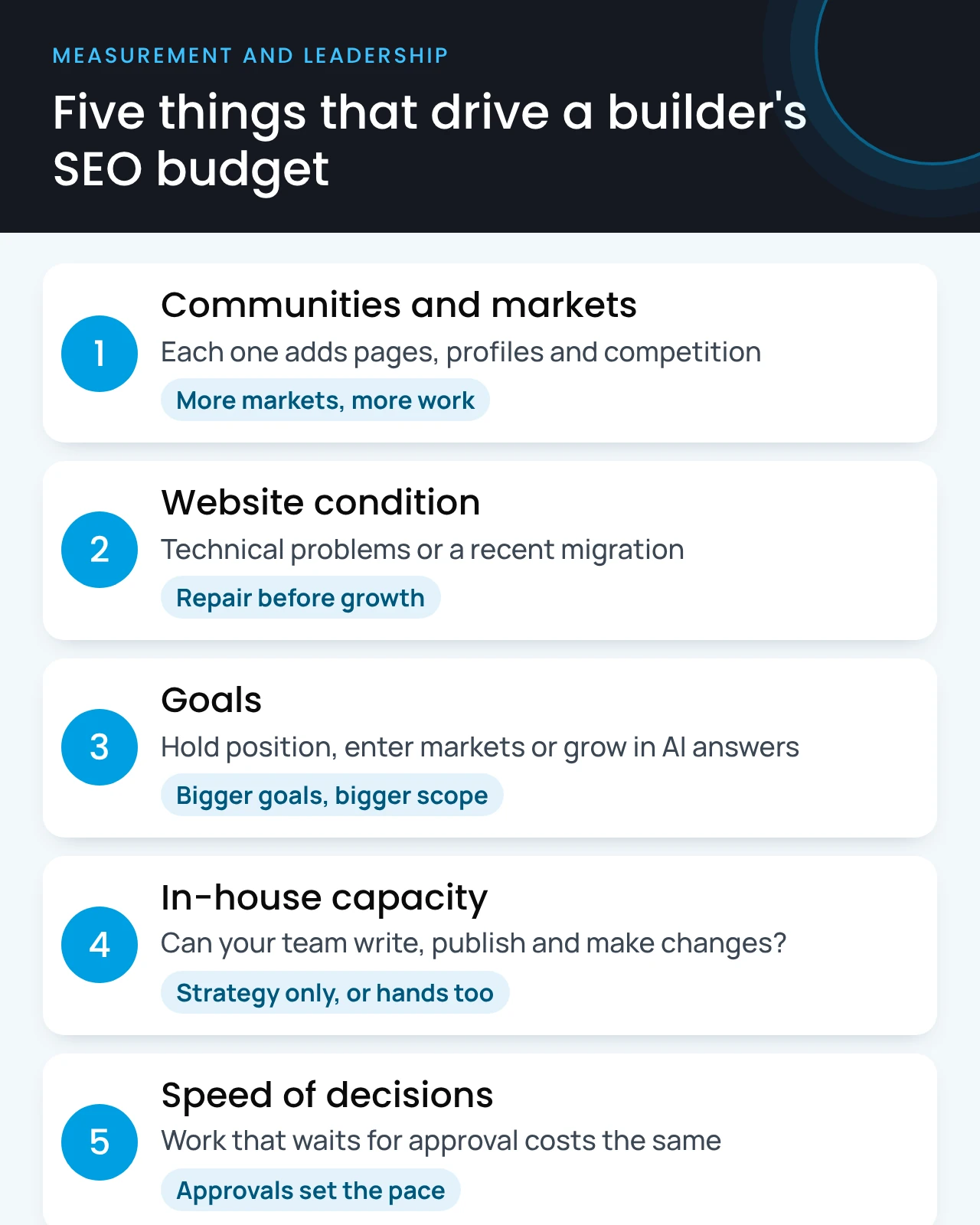
Five things decide how much SEO work a builder needs. Know where you stand on each before you read a proposal.
- Communities and markets. Every community and metro adds pages, profiles and local competition. A single-market builder and a ten-market builder need different levels of work.
- Website condition. A site with years of technical problems, competing pages or a recent migration needs repair before growth work pays off.
- Goals. Holding position in existing markets costs less than entering new ones, winning searches that don’t include your name, or building visibility in AI answers.
- In-house capacity. If your team can write, publish and make website changes, an outside partner can focus on strategy and oversight. If not, the budget must cover the hands too.
- Speed of decisions. Work that waits weeks for approval costs the same and delivers less. The book is direct about this: if you hold the sign-off, you hold the success.
Phase the budget: fix, build, grow
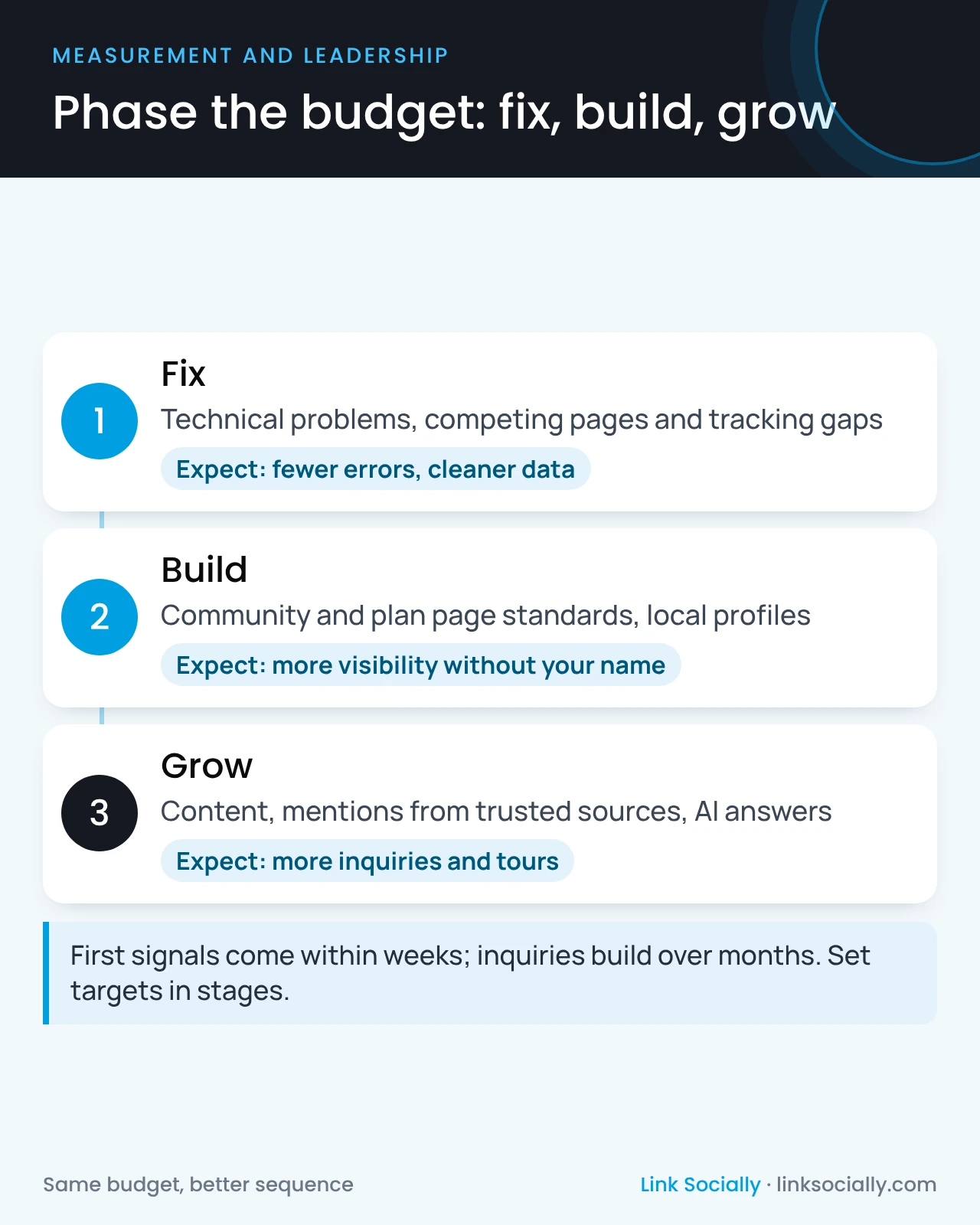
Most builders get more from the same budget by spending it in a sequence rather than all at once.
- Fix. Find and repair what holds the site back: technical problems, competing pages and tracking gaps. Expect fewer errors and cleaner data.
- Build. Set the standards for community and floor plan pages, and get local profiles and listings right in every market. Expect growing visibility for searches that don’t include your name.
- Grow. Expand content, earn mentions and citations from trusted sources, and build visibility in AI answers. Expect more inquiries and tours, measured by community.
The first visible signals usually come within weeks of changes going live. Growth in qualified inquiries takes longer, often several months, which is why targets should be set in stages.
What the budget should buy
Whatever the number, a proposal should make clear what you get each month and how you will know it worked. Ask for:
- Named work delivered each month, not just hours or meetings.
- A clear owner for each piece of work, on both sides.
- A regular rhythm: monthly progress reviews and a quarterly reset of priorities.
- Reporting that reaches inquiries, tours and contracts, as described in connecting organic search to contracts.
The book’s definition of done is a useful test for any proposal: implemented, measured and documented.
Four budget mistakes to avoid
- Buying hours instead of outcomes. A retainer measured in hours rewards activity, not results.
- Paying for new content before fixing the foundation. New pages on a site with technical problems or competing pages often underperform from the start.
- Cutting the budget before the work can show results. Search changes take months to be implemented, picked up and measured. Judge each stage against the targets set for it.
- Funding AI search as a separate program. For most builders it belongs inside the same strategy, as the guide on GEO vs. SEO explains.
Our published reference point
We publish our rates so builders can compare before a sales conversation. Ongoing engagements start at $3,500 per month with a six-month initial term, then continue month to month. A Fractional Head of SEO is $9,000 to $12,000 per month, and standalone technical SEO audits start at $7,500. The pricing page explains each tier and what it includes.
Questions to ask about any proposal
- What will be delivered in the first 90 days, and what will we see as a result?
- How is the work sized to our number of communities and markets?
- What do you expect our team to do, and how much of their time will it take?
- How will you show the effect on inquiries, tours and contracts?
- What happens if a phase finishes early, or runs late?
If paid search is part of your plan, review it alongside the SEO budget. The paid and organic overlap case study shows what paying for searches you already win can cost.