
What structured data is, in one paragraph
Every page on your site is written for people. Structured data is a second, hidden layer written for machines. It labels the facts on the page in a standard vocabulary: this is a home builder, this is a community at this location, this is a floor plan with four bedrooms, this sales office is open these hours. Search engines and AI assistants can still read the page without it, but with it they don’t have to guess. Cristobal Varela’s book calls it a translator, and in his On-Page Quality Model it is one of the most heavily weighted elements of a page.
What it describes for a builder
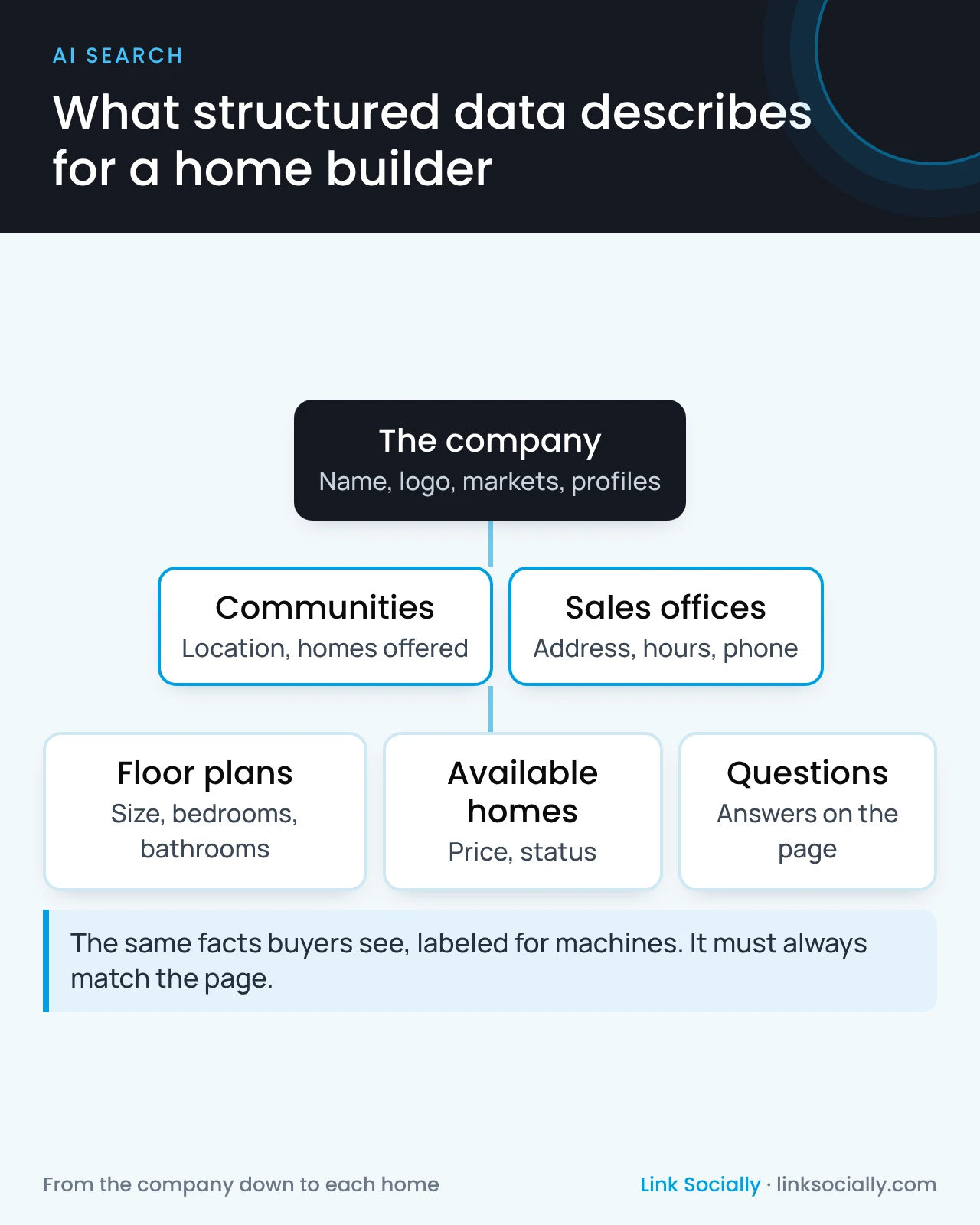
For a home builder, structured data should describe the same things buyers care about, in the same relationships.
- The company: its name, logo, markets and the profiles that confirm it is the same business everywhere.
- Communities: where each one is and which homes it offers, matching what the community page shows.
- Floor plans and available homes: size, bedrooms, bathrooms and, where you publish it, price.
- Sales offices: address, hours and phone, matching your Google profile and your local SEO listings.
- Questions and articles: the FAQs and guides on the page, so their answers can be found directly.
Inside a national builder, this kind of work, combined with clear page purposes, was part of the foundation behind a 3,989% increase in AI brand mentions in 10 months.
The rule that matters most: it must match the page
Structured data is only valuable if it is true. A home marked as available after it sold, a price that wasn’t updated, or sales office hours that changed last season send the wrong facts to every system that reads them, including the AI assistants your buyers ask. Google’s guidance on its AI features is plain: no special structured data is needed to appear in them, and the structured data you do have should match the visible text on the page.
That is why structured data shouldn’t be typed by hand page by page. It should be produced by the website from the same data that fills the page, so when sales updates a price or a status, the page and its labels change together.
How to find out what you have today
You don’t need to read code to see where you stand. Ask your web team or agency for a one-page summary that answers three questions: which kinds of pages carry structured data today, such as the homepage, community pages, plan pages and available homes; whether Google’s own reports show errors in it; and when it was last checked.
Most builders find gaps the first time they ask. Structured data is often added once, at launch, and then quietly falls out of date as templates change, or covers the homepage but not the community and home pages that buyers actually search for.
What to require from your web team or vendor
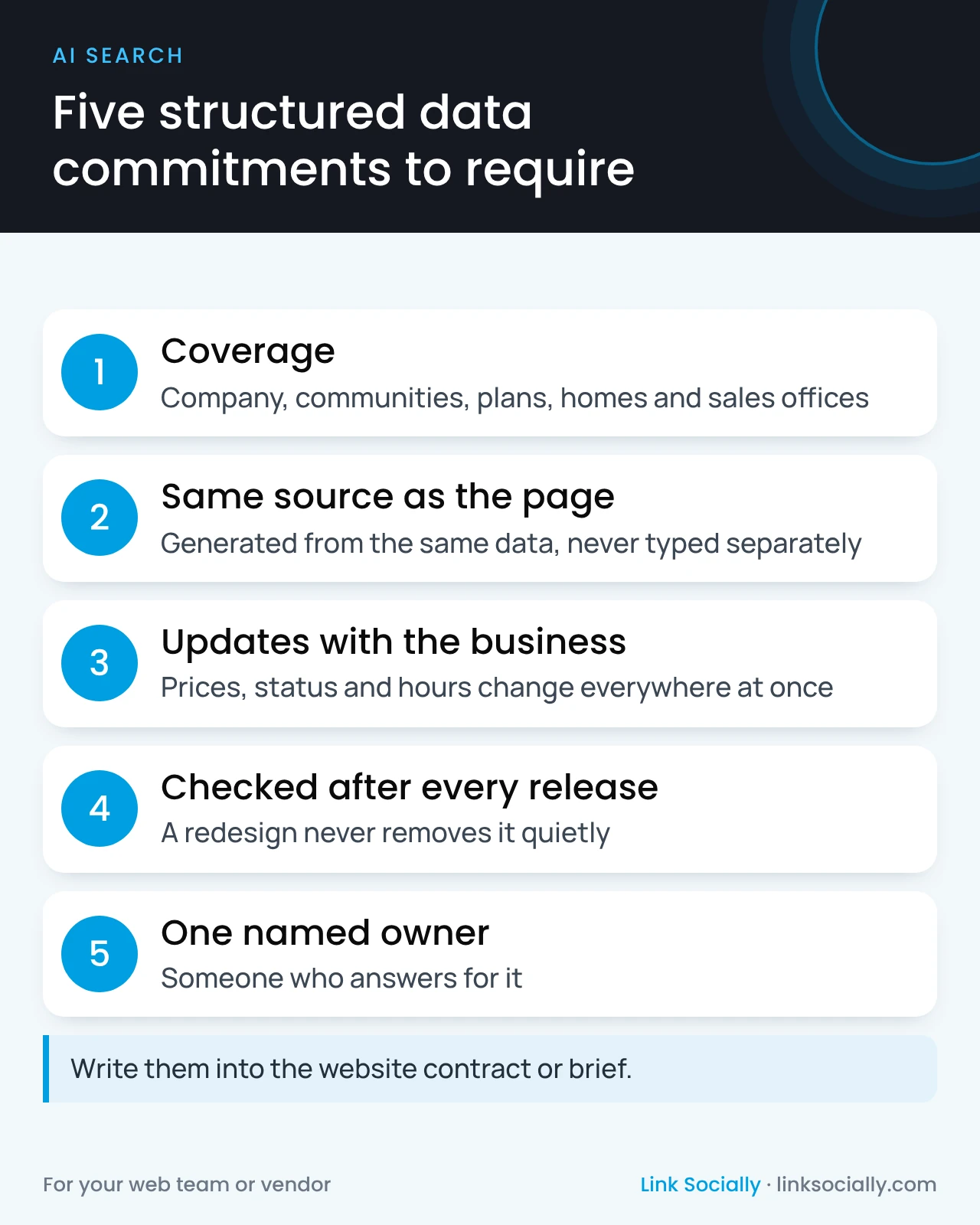
You don’t need to review the code. You need these commitments, ideally written into the website contract or brief:
- Coverage: the company, every community, plan and available home, and every sales office.
- Same source as the page: generated from the data that fills the page, never typed separately.
- Updates with the business: when prices, status or hours change, the structured data changes too.
- Checked after every release, so a redesign or update doesn’t quietly remove it.
- One named owner who answers for it.
Questions to ask your team
- Does our site have structured data for the company, communities, plans, available homes and sales offices?
- Is it generated from the same data as the page, or maintained separately?
- When a home sells, how long until the structured data says so?
- Who checks it after each website release?
Who owns it
- The web team or vendor builds it into templates and keeps it working.
- The SEO lead or agency defines what it should describe and checks it regularly.
- Division sales keep the underlying facts current, as they already should for the page.
- Leadership requires it in contracts and makes sure someone owns it.
Structured data is one part of the AI search optimization framework. When it is missing or wrong, it is often the reason AI assistants get your builder wrong.