
A wrong answer can cost more than a missing one
When an AI assistant leaves you out, you lose a chance. When it gets you wrong, the cost lands in the sales center. A buyer arrives expecting last year’s price, asks about a community that sold out months ago, or quotes a warranty term you changed. The sales team starts the conversation by correcting the record, and the buyer starts it wondering what else is out of date.
These errors are easy to miss. They don’t show up in your analytics, and nobody on your team sees the conversation. That is why the monthly AI answer review described in how buyers use ChatGPT to shortlist builders should check accuracy, not just whether you are named.
Why AI assistants get builders wrong
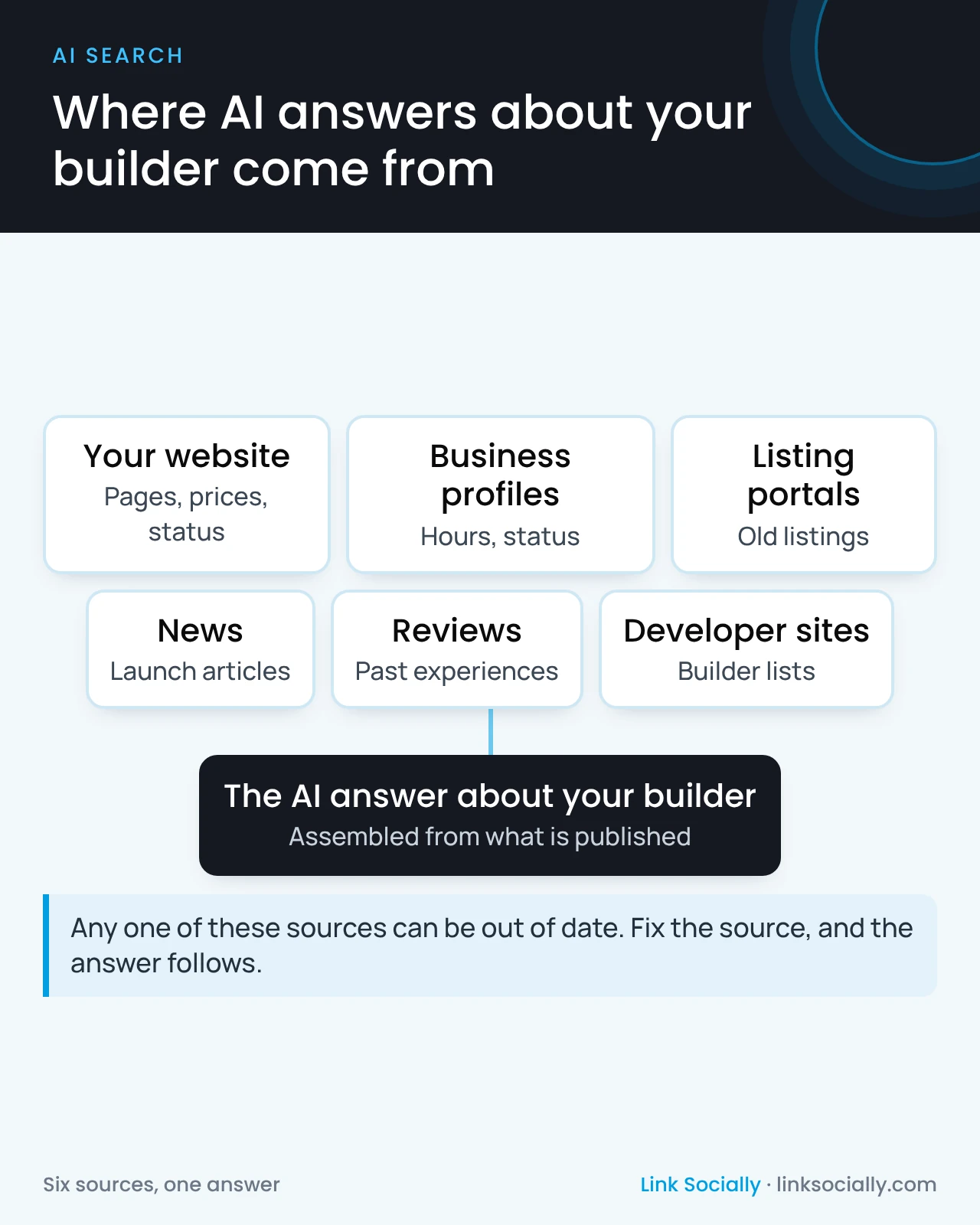
AI assistants don’t invent facts about builders out of thin air. They assemble answers from what is published, and builders change fast: prices move, communities sell out, plans are retired and warranties are updated.
Common sources of stale facts include:
- Your own website: sold-out community pages still marked as selling, old price sheets and retired plan pages.
- Business profiles: sales office hours and status that weren’t updated at closeout.
- Listing portals: old listings that are still live.
- News and partner sites: a launch article with launch pricing, or a developer page that was never updated.
- Reviews: comments that describe an older warranty or process.
A correction plan in four steps
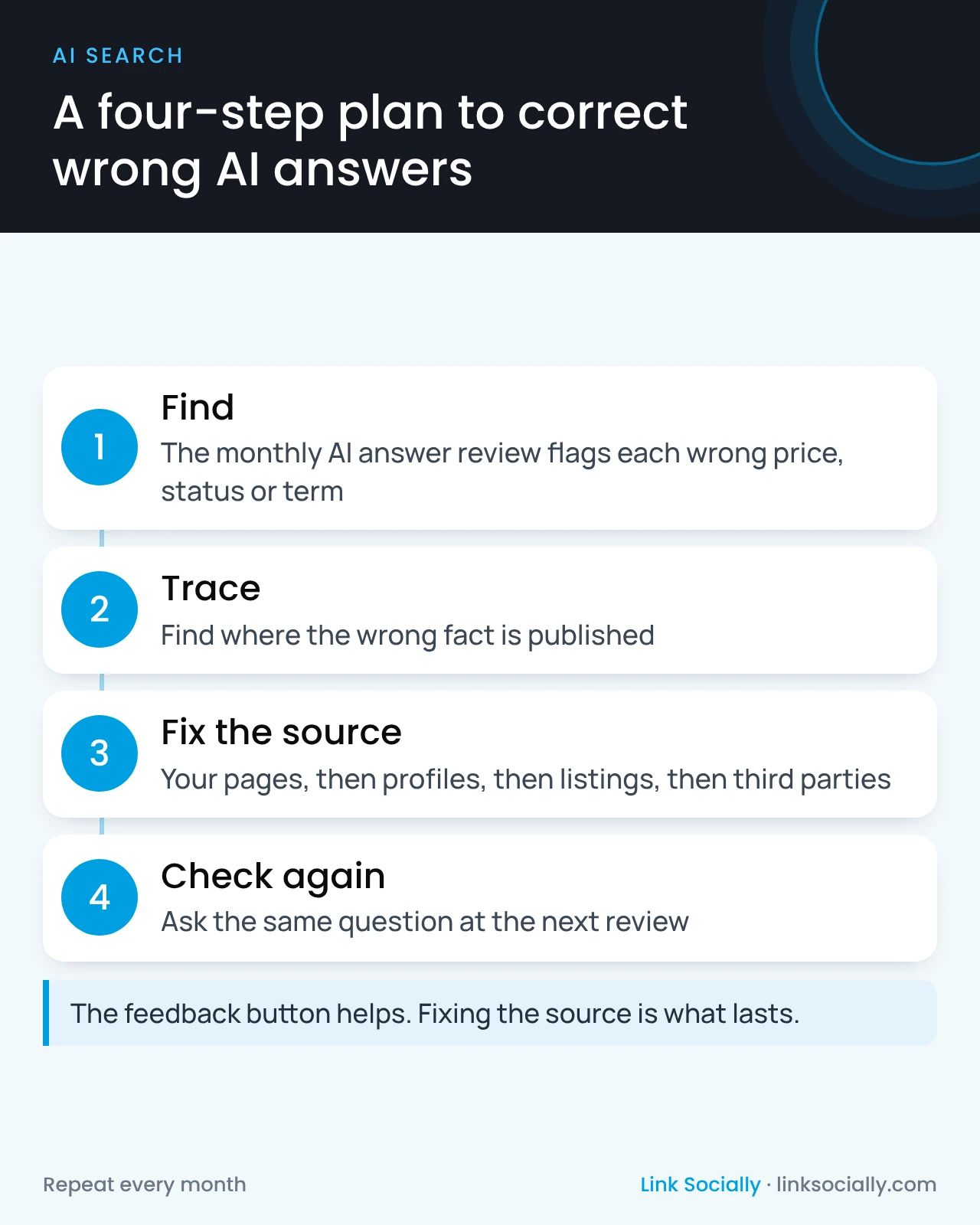
The plan is simple enough to run every month, and it gives each error an owner.
- Find. The monthly AI answer review flags every wrong price, status or term, by market.
- Trace. For each error, find where the wrong fact is published. Many assistants show their sources, which makes this faster.
- Fix the source. Your own pages first, then your profiles, then listings, then a request to the third-party sites that published it.
- Check again. Ask the same question at the next review. If the answer hasn’t changed, look for a second source.
Using the assistant’s feedback button helps, but it is not the fix. The source is.
Which errors to fix first
Not every error carries the same risk. Fix them in this order:
- Prices and availability. These create the most friction in the sales center and the most disappointed buyers.
- Community status. A sold-out community recommended as selling, or a new one described as not yet open.
- Warranty, financing and incentive terms. Anything a buyer might treat as a promise.
- Descriptions. The wrong home types, amenities or markets. Less urgent, but they shape whether you make the shortlist.
Prevent it: make current facts easy to find
The best defense is a website that always states current facts clearly, in one place, and updates them when they change:
- One source of truth for prices and status, so the website, profiles and listings update together.
- A plan for every page when communities sell out and plans retire, as described in what to require from community pages.
- Facts stated plainly in text, not only in brochures, tours or images.
- Structured data that matches the page, so machines read the same facts buyers see. Google’s guidance on its AI features recommends exactly that. The post on structured data for builder leaders explains what to require.
The guide to defending AI mentions and citations covers the wider work of keeping your place in AI answers as markets change.
Questions to ask your team
- In last month’s AI answer review, how many answers about us were wrong, and in which markets?
- For each error, do we know where the wrong fact came from?
- When we change a price or close a community, what gets updated, and how fast?
- Which third-party sites still show old information about us, and who is asking them to fix it?
Who owns it
- The marketing leader owns accuracy and reviews the monthly results.
- Division sales and marketing own prices, status and closeouts at the source.
- Local marketing owns business profiles and listings.
- The web team or vendor makes sure the site updates when the data changes.
- The SEO lead or agency runs the review and traces each error to its source.
Accuracy is part of every AI search visibility engagement we run, because being named only helps when what is said about you is true.